CUSTOMER CENTRICITY
Critical competitive advantage in a dynamic Africa landscape
Our first edition of Management Bytes focused internally on the importance of control over inventory and market collections–in short, working capital and cash flow management. In the second edition, we shifted gears to look outward and better understand the markets in which we operate. In this third edition, we continue that outward focus and turn to a critical theme: customer centricity. This is what keeps customers with us when conditions get tough: because they know they have a dependable, fair, and long-term partner in us.
Globally, and especially in developing economies, businesses are operating in environments that are changing faster than ever. Markets are opening up, competition is intensifying, technology is reshaping expectations, and customers are becoming more informed and selective. In this landscape, one principle consistently separates successful businesses from the rest: customer centricity. This goes far beyond good customer service. It is a strategic shift in mindset–placing the customer at the center of decision-making, from product selection and pricing to operations, distribution, and everyday interactions. In Africa, where competitive conditions evolve rapidly, this shift is essential for sustainable success.
The African competitive reality is complex. Markets are unique, customers are diverse and price-sensitive, yet increasingly digitally connected. Barriers to entry in many sectors are falling–fintech startups challenge traditional banks, and informal traders compete directly with large retailers. In such an environment, competing purely on price becomes a race to the bottom. Competing on scale alone is also insufficient, as more agile players continue to emerge. What remains a durable advantage is a deep understanding of the customer and a trusted relationship that goes beyond transactions.
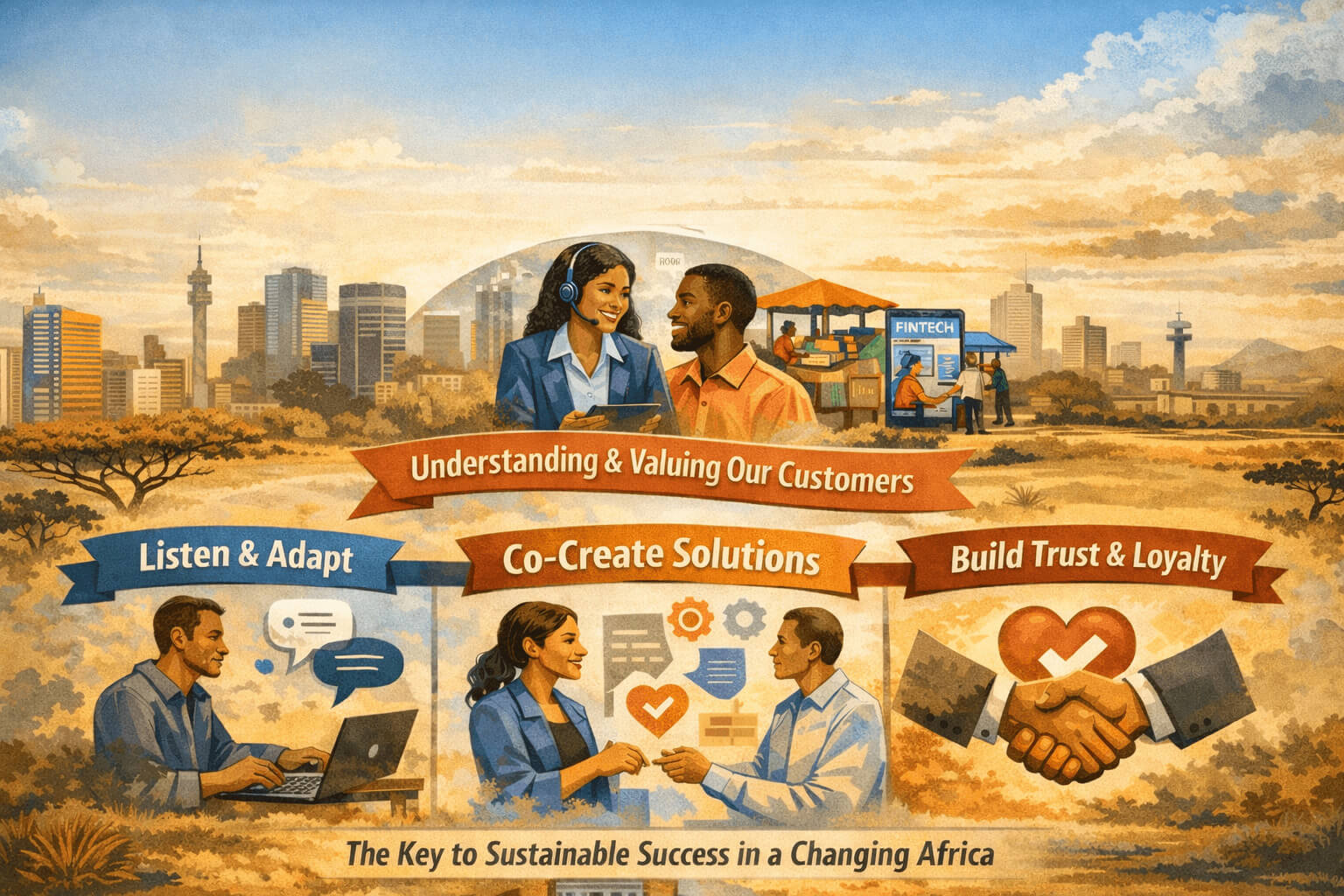
Customer-centric organizations consistently do a few things well:
- Listen continuously to customers and changing market dynamics, enabling them to detect shifts early.
- Design solutions around real customer needs, co-creating value rather than forcing one-size-fits-all solutions.
- Build trust and loyalty, moving relationships beyond short-term transactions to long-term partnerships.
In contrast, inward-looking businesses–those overly focused on processes, hierarchies, or legacy models–tend to react slowly and lose touch with the market.
In Africa’s competitive and fast-moving business environment, the organizations that succeed are those that see change not as a threat, but as an opportunity to serve customers better and adapt faster. Those who listen, evolve, and consistently create genuine value will not just survive competition, they will lead it.