When a biopsy is examined for cancer in Dar es Salaam, a patient’s ear is treated in Mwanza, or a stool sample is tested in Arusha, the equipment doing the work may well have been supplied by our very own Artemis entity, KAS Medics. The company works with specialist manufacturers in Europe and Asia to bring modern diagnostic and treatment technology to hospitals and laboratories across the country. Here is a closer look at six of them.
A Complete ENT Clinic in One Unit
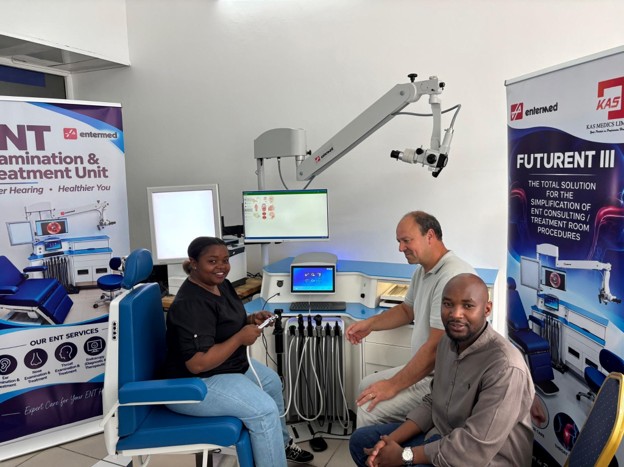
At Bugando Medical Centre in Mwanza, KAS Medics has supplied the FuturENT III from EnterMed (Netherlands), an ear, nose and throat (ENT) treatment unit. Suction, irrigation, examination lighting, video endoscopy and electrosurgery all sit in one compact workstation, run from a single touch screen. The unit has no handles, knobs or buttons, which makes it far easier to keep clean between patients. It is also designed so the doctor doesn’t have to keep reaching for instruments over a long clinic day.
Preparing Tissue for Cancer Diagnosis
Most cancer diagnoses depend on histopathology, where a doctor examines thin slices of tissue under a microscope. Before that can happen, the tissue has to be preserved, infused with paraffin wax, and set into a solid block that can be cut into slices just a few microns thick. Leica Biosystems (Germany) makes tissue processors and embedding centres that automate this process. Its range includes systems designed to return same-day results. KAS Medics has supplied this equipment to Muhimbili National Hospital, Saifee Hospital and Bochi Hospital in Dar es Salaam.
AI Comes to the Stool Lab
Stool analysis is one of the most routine tests in any clinical laboratory, and one of the least pleasant to do by hand. At Mount Meru Regional Referral Hospital in Arusha, KAS Medics has placed a fully automated feces analyser from AVE Science & Technology (China). It combines physical and chemical stool examination with AI-powered microscopic detection, replacing the manual microscopy that technicians have traditionally done one slide at a time.
Testing for Many Allergies from One Blood Sample
Mount Meru is also home to an allergy analyser from Protia Inc. (South Korea). It is a set of two machines: the Q-Processor, which automatically runs the test, and the Q-Smart, which reads the results. Together they detect allergen-specific antibodies in a patient’s serum or plasma using a technique called immunoblotting. Instead of testing for allergens one by one, a single blood sample can be checked against a whole panel of allergens at once. Patients don’t need to go through skin-prick testing.
Both the AVE and Protia analysers are placements. Instead of buying the machine outright, the hospital gets it installed on site, giving it access to automated testing without a large upfront investment.
Microscopes for Every Bench
Even with all this automation, the microscope is still the workhorse of every laboratory. Optika (Italy) makes laboratory microscopes ranging from routine upright models to research-grade fluorescence and polarising systems. KAS Medics has supplied Optika microscopes to Mawenzi Hospital in Moshi.
Advanced Imaging
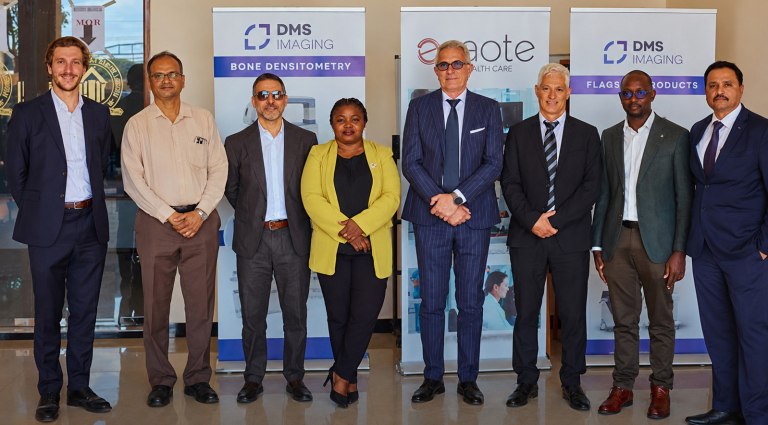
Readers may remember Esaote (Italy) from our earlier article on KAS Medics’ work with Tanzania’s Ministry of Health. Esaote’s radiology portfolio includes the MyLab ultrasound range and dedicated MRI systems, with AI tools built in to support image analysis and prioritise worklists. Esaote equipment supplied by KAS Medics is now in use at AICC Hospital in Arusha, Rabinisia Memorial Hospital in Dar es Salaam and Sukenya Dispensary in Moshi.
Looking Forward
From national referral hospitals to a local dispensary, these partnerships give facilities across Tanzania access to the same kind of equipment used in leading laboratories around the world. Faster results, more accurate diagnoses and cleaner, more efficient clinics all mean better care for patients. KAS Medics is proud to play its part.